Your Cart is Empty

Your immune system is working around the clock to protect your body, maintain healthy tissues, and respond to everyday challenges. But what happens when the cellular systems supporting your immune defenses aren't getting everything they need?
A healthy immune system depends on more than one nutrient. It relies on adequate nutrition, balanced inflammatory responses, healthy cellular function, and the body's ability to manage oxidative stress.
Two nutrients worth understanding are N-acetyl cysteine (NAC) and vitamin D3. Although they work through different pathways, both play important roles in the biological processes that help maintain immune health.
NAC helps your body produce glutathione, one of its primary internal antioxidant compounds. Vitamin D3 helps regulate immune cell activity and supports communication between different parts of the immune system.
Even more interesting, emerging human research is investigating what happens when these two nutrients are used together.
Let's explore how NAC and vitamin D3 work, why their individual roles matter, and what science is beginning to reveal about their potential complementary benefits.
N-acetyl cysteine, commonly known as NAC, is a compound derived from the amino acid cysteine. Its importance comes largely from its role in supporting the body's production of glutathione, a naturally occurring antioxidant found throughout the body.
Glutathione helps cells manage oxidative stress, maintain their internal chemical balance, and protect important cellular components.
To understand why NAC matters, it's helpful to understand what happens inside your cells every day.
Glutathione is often called the master antioxidant because it plays a central role in your body's defense against oxidative stress and helps keep your cells functioning at their best. Found throughout the body, this powerful compound is produced naturally inside your cells and supports some of the most important processes involved in cellular health, immune function, and the body's natural detoxification pathways.
Every day, your cells face stress from normal metabolism, environmental exposures, and the demands of everyday life. These processes can generate free radicals and other reactive molecules that, when they accumulate beyond the body's ability to manage them, can damage cellular components and interfere with normal function.
Glutathione helps your body maintain this balance. It neutralizes certain reactive molecules, helps recycle other antioxidants, and supports the cellular systems responsible for managing oxidative stress. By protecting the integrity of cells, glutathione helps create the internal environment your body needs to maintain healthy immune function and respond effectively to everyday challenges.
Glutathione is especially important for immune health because immune cells rely on a balanced internal environment to communicate, coordinate their activity, and carry out their normal functions. Adequate glutathione helps support these processes while contributing to the regulation of oxidative stress during immune responses.
The challenge is that your body must continually produce and replenish glutathione to keep up with its needs. That production depends on having the right nutritional building blocks available—which is where NAC becomes particularly interesting.
Glutathione is made from three amino acids: glutamate, cysteine, and glycine. Cysteine availability can be a limiting factor in its production.
NAC provides a source of cysteine that the body can use to help replenish glutathione.
This is why researchers have investigated NAC in relation to oxidative stress, inflammatory signaling, respiratory health, and immune function.
NAC's potential benefits are not simply about adding an antioxidant to your diet. Instead, it helps support one of the body's own antioxidant production systems.
Research summarized by the National Institutes of Health Office of Dietary Supplements discusses NAC's ability to increase intracellular glutathione and the importance of glutathione in normal immune cell function.
Glutathione participates in several processes relevant to immune function, including T-cell activation and differentiation. These cells help coordinate targeted immune responses.
Researchers are also investigating NAC's influence on inflammatory signaling and respiratory mucus.
This is important because immune health requires balance. The body needs to recognize and respond to challenges while maintaining appropriate control over inflammation and oxidative activity.
NAC provides a practical way to support the availability of a key building block involved in that process.

Vitamin D is often associated with strong bones, but its role extends much further.
Vitamin D functions as a hormone-like signaling molecule. Many immune cells contain vitamin D receptors, allowing them to respond to vitamin D and use its signals to regulate their activity.
This makes vitamin D3 an important nutrient to consider when looking at the foundations of immune health.
Your immune system has two major branches: innate immunity and adaptive immunity.
Innate immunity provides the body's initial response to potential threats. It involves physical barriers, specialized immune cells, and rapid signaling processes.
Adaptive immunity involves specialized cells, including T cells and B cells, that recognize particular targets and help coordinate more specific immune responses.
Vitamin D contributes to the regulation of both systems.
It influences immune cell differentiation, cellular signaling, and the production of certain immune-related proteins. It also participates in regulating inflammatory responses.
In other words, vitamin D isn't simply about making the immune system more active. It helps the body coordinate immune activity and maintain normal immune function.
Your vitamin D status is influenced by sun exposure, dietary intake, age, skin pigmentation, geographic location, and other individual factors.
During fall and winter, reduced sunlight exposure can make it more difficult for many people to produce vitamin D through their skin. Vitamin D3 supplementation offers a practical way to increase intake and support adequate vitamin D status.
Maintaining vitamin D sufficiency supports several important functions, including immune regulation, calcium absorption, muscle function, and bone health.
For those interested in the underlying science, the NIH Office of Dietary Supplements Vitamin D Fact Sheet provides a detailed overview of vitamin D's biological roles.
The important takeaway is that vitamin D is not just a seasonal nutrient or a bone-health nutrient. It participates in the signaling systems that help your immune cells function properly.
NAC and vitamin D3 support different biological processes, which is precisely what makes their relationship interesting.
NAC helps provide cysteine for glutathione production. Vitamin D3 activates signaling pathways that help regulate immune cell activity.
One supports the body's antioxidant defenses; the other helps coordinate immune function.
These processes are interconnected because immune cells must manage oxidative activity while responding to signals from the surrounding environment.
Research suggests that oxidative stress, antioxidant defenses, and vitamin D signaling can influence overlapping biological pathways.
Glutathione helps maintain cellular redox balance, while vitamin D influences gene expression and signaling in immune cells. Researchers are investigating how supporting these systems simultaneously might affect cellular health and inflammatory processes.
This means NAC and vitamin D3 have complementary biological roles to positively affect your immune system.
A randomized clinical trial published in Frontiers in Immunology in May 2025 examined NAC and vitamin D supplementation in older adults with vitamin D deficiency.
The study included 88 participants, aged 65 and older, who were assigned to four groups for eight weeks:
Researchers examined markers associated with cellular senescence, a process in which cells stop dividing and can develop altered patterns of inflammatory signaling.
The results were intriguing. The higher-dose vitamin D groups showed improvements in several measured cellular-aging markers compared with the 1,000 IU vitamin D group.
Adding NAC was associated with additional improvements in selected markers, including p16 gene expression in the group receiving 1,000 IU of vitamin D. The findings suggest that NAC and vitamin D may influence overlapping pathways involved in oxidative stress, inflammation, and cellular aging.
Why is this significant? It moves the conversation beyond studying individual nutrients in isolation and toward understanding how nutritional strategies may work together within the body.
You can read the full study here: NAC and Vitamin D to Modulate Immunosenescence in Older Adults With Vitamin D Deficiency.
This is an excellent example of the direction functional-health research is heading: investigating how antioxidant support and essential nutrients interact with the body's own cellular processes.
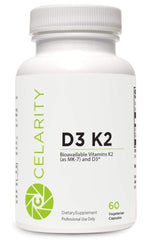
Although NAC and vitamin D3 are the primary focus here, vitamin K2 is often included in vitamin D formulations for a different reason.
Vitamin D helps the body absorb calcium, while vitamin K activates proteins involved in bone mineralization and the regulation of calcium in tissues.
In simple terms, D3 supports calcium absorption, while K2 helps activate proteins involved in how the body uses and regulates calcium.
The two nutrients contribute to complementary aspects of bone and mineral health. Vitamin K2 is not established as a direct immune-support nutrient in the same way vitamin D is, but it can complement D3 in a broader nutritional strategy.
NAC and vitamin D3 work through different but complementary pathways.
NAC helps provide cysteine for glutathione production, supporting the body's antioxidant defenses. Vitamin D3 helps regulate immune cell activity and contributes to normal immune function.
Supporting health means giving the body's interconnected systems the nutrients and foundational inputs they need to function properly.
Rather than focusing only on individual symptoms, take a broader approach. Prioritize nutrient-dense food, adequate protein, healthy digestion, restorative sleep, regular movement, and nutritional support that fits your needs.
When you understand how these systems work together, you can make more informed decisions about supporting your immune health from the inside out.
Resources
1. NIH Office of Dietary Supplements: Dietary Supplements for Immune Function and Infectious Diseases — NAC, glutathione, and immune function.
2. NIH Office of Dietary Supplements: Vitamin D Fact Sheet for Health Professionals — Vitamin D's functions and scientific evidence.
3. Rastgoo et al., 2025, Frontiers in Immunology — Randomized clinical trial investigating NAC and vitamin D in older adults with vitamin D deficiency.