Your Cart is Empty

Every fall, the same pattern begins. The days get shorter, temperatures drop, we're spending more time indoors, schedules get busier, and before long, the sniffles seem to be making their way through the entire family.
But supporting your immune system shouldn't start after you get sick.
Your immune system is working around the clock, every day of the year. And how well it functions depends on much more than simply taking an immune supplement when you feel a scratchy throat coming on.
Your immune health is built from the inside out.
The food you eat, the nutrients you absorb, the quality of your sleep, your stress levels, physical activity, gut health, and even your vitamin and mineral status all contribute to the environment in which your immune system has to operate.
That's why I like to think about immune resilience rather than simply immune boosting.
The goal isn't to force your immune system into overdrive. It's to make sure your body has the nutritional building blocks and healthy foundation it needs to recognize challenges, respond appropriately, and recover.
And if you're waiting until the first cold of the season to start thinking about immune support, you're already playing catch-up.
The best time to build your foundation is before you need it.
Your immune system is not a single organ or process. It's a complex network involving immune cells, tissues, organs, the gut, respiratory tract, and protective barriers throughout the body.
That means immune resilience isn't about finding one magic supplement.
It's about asking:
Are you giving your body what it needs to function well?
Nutrients including vitamins A, C, D, E, and minerals such as zinc and selenium all play roles in normal immune function. Research from the National Institutes of Health also shows that deficiencies in certain nutrients can impair immune responses and increase susceptibility to infection. ODs
This is one reason I prefer a foundation-first approach to seasonal immune support.
Before reaching for a dozen different supplements, look at the basics:
These aren't glamorous answers—but they are foundational.
If there is one nutrient I pay particularly close attention to as we head into fall and winter, it's vitamin D.
Vitamin D is important for much more than bones. It also plays a role in immune regulation and immune function. Research has found an association between low vitamin D status and respiratory infections. Evidence suggests supplementation may reduce respiratory infection risk, particularly in people with low vitamin D levels. ODs
This makes sense from a foundational perspective.
Our bodies can produce vitamin D when skin is exposed to sunlight. But as the days get shorter and we spend more time indoors, maintaining adequate vitamin D status can become more challenging.
Vitamin D3 K2 combines vitamin D3 with vitamin K2 and can be incorporated into a broader nutritional strategy for maintaining adequate vitamin D intake.
I think of this less as a “cold and flu supplement” and more as foundational nutritional support—especially during the months when sunlight exposure tends to decrease.
Your immune system begins working before an immune cell ever encounters a virus.
Your body has physical barriers designed to help keep unwanted organisms out in the first place. Your skin is one example, while the mucosal tissues lining your respiratory and digestive tracts are another.
Vitamin A helps maintain these epithelial barriers and plays an important role in normal immune function. Vitamin A deficiency can impair immune responses.
This is an important reminder that immune health isn't simply about “killing germs.”
It's also about maintaining the barriers and tissues that help protect you in the first place.
Food should always be the foundation. Vitamin A is found in foods such as eggs and liver, while colorful plant foods provide carotenoids that the body can convert to vitamin A.
Vitamin C is one of the most important nutrients for immune health, and there's a reason it has been a staple of immune-support protocols for decades.
Your immune system uses vitamin C throughout the body. It supports the normal function of immune cells, helps maintain the protective barriers of the skin and tissues, and acts as a powerful antioxidant that helps protect cells from oxidative stress.
Vitamin C is also particularly important during times when the body is under increased physiological stress. Immune cells actively use vitamin C as they respond to challenges, which is one reason maintaining adequate levels is so important.
And here's the key distinction: vitamin C isn't something you should think about only after you start feeling sick.
It's a foundational nutrient your body needs every day.
While food should always be the starting point, getting enough vitamin C can sometimes be challenging—especially during periods of increased stress, poor dietary intake, or illness. Good food sources include citrus fruits, berries, kiwi, peppers, broccoli, and leafy greens.
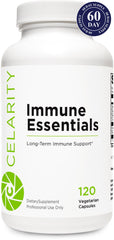
For additional nutritional support, vitamin C can be an important part of a comprehensive immune-support formula like Immune Essentials.
The goal isn't to wait until your immune system is under pressure. It's to make sure your body has the nutritional support it needs before the season gets underway.
Zinc is another essential nutrient that deserves attention when you're thinking about immune resilience.
Your body needs zinc for hundreds of enzymatic processes, including immune function, DNA and protein synthesis, wound healing, and cellular signaling.
This is where a multi-nutrient formula can make sense.
Immune Essentials combines:
Rather than relying on one isolated nutrient, Immune Essentials provides several nutritional compounds associated with antioxidant defenses and normal immune function.
N-acetyl cysteine, or NAC, is a precursor to glutathione, one of the body's important endogenous antioxidants. NAC provides cysteine, which the body uses to produce glutathione.
Quercetin is a naturally occurring flavonoid found in foods such as onions, apples, and berries. It's known for its antioxidant properties and is commonly included in nutritional formulas designed to support cellular health.
Together, these nutrients provide complementary nutritional support for normal immune function. Vitamin A supports epithelial barriers, vitamin C contributes to antioxidant defenses, vitamin D participates in immune regulation, and zinc supports numerous cellular and immune functions.
The philosophy is simple: support the system rather than chase symptoms.
If you're looking at immune health holistically, you can't ignore the digestive system.
Your gastrointestinal tract is one of the body's major interfaces with the outside world. The cells lining your digestive tract provide a physical barrier, while your gut contains a complex microbial ecosystem that interacts with your immune system.
That means what you eat every day matters.
Build meals around:
Quality protein + colorful vegetables + healthy fats + minimally processed ingredients.
A diverse diet provides vitamins, minerals, polyphenols, fiber, and other compounds that support overall health.
And this is why I don't recommend thinking about immune health as a seasonal project.
Your immune system is built year-round.
There's another part of immune health that doesn't come in a capsule:
If you're constantly stressed, sleeping five hours a night, overtraining, under-eating, and running on caffeine, adding another supplement may not address the underlying problem.
Sleep gives your body an opportunity to recover and regulate countless physiological processes. Chronic stress can also influence immune and inflammatory pathways.
So before asking:
“What supplement should I take?”
also ask:
“What is my body asking me to change?”
Sometimes the answer is more sleep.
Sometimes it's better nutrition.
Sometimes it's reducing alcohol.
Sometimes it's getting outside and moving your body.
And sometimes it's simply slowing down.
Looking at the whole picture is often more valuable than focusing on a single symptom.
If you want to be proactive this fall, start with the basics:
1. Eat nutrient-dense food.
Make protein, vegetables, healthy fats, and colorful plant foods the foundation of your diet.
2. Check your vitamin D status.
Especially heading into the darker months, consider whether testing and targeted vitamin D supplementation make sense for you. For more information about adequate vitamin D levels, watch this video.
3. Prioritize sleep.
Your immune system needs recovery. Make consistent, quality sleep a priority.
4. Move your body.
Regular exercise supports overall health—but remember that recovery is part of the equation, too.
5. Support your nutritional foundation.
Vitamin D3 K2 and Immune Essentials can be considered as part of a broader nutritional strategy.
6. Start before you need it.
The goal is to build resilience before your body is under additional stress.
Cold and flu season doesn't have to be a reminder that you neglected your health all summer.
Think of fall as an opportunity to strengthen your foundation.
Your immune system needs adequate nutrition, healthy barriers, antioxidant defenses, recovery, movement, and a well-supported body to do its job.
The goal isn't to “supercharge” your immune system.
The goal is to give your body what it needs to function at its best.
And that starts before the first cough, sniffle, or scratchy throat of the season.
Research & Resources
NIH Office of Dietary Supplements — Dietary Supplements for Immune Function and Infectious Diseases
NIH Office of Dietary Supplements — Vitamin D Fact Sheet
NIH Office of Dietary Supplements — Vitamin C Fact Sheet
NIH Office of Dietary Supplements — Zinc Fact Sheet
NIH Office of Dietary Supplements — Immune Function Consumer Fact Sheet