Your Cart is Empty
For years, cancer has often been talked about as if it were simply a matter of genetics.
"It runs in my family."
"It's just bad luck."
"There's nothing I can do about it."
But that's not the whole story.
Your genes matter—but genes are only one piece of the cancer puzzle.Cancer risk is influenced by a complex combination of inherited genetics, age, infections, environmental exposures, metabolism, hormones, immune function, and lifestyle. The National Cancer Institute specifically identifies factors such as tobacco, alcohol, obesity, diet, physical activity, chronic inflammation, radiation, and environmental exposures among factors that can influence cancer risk.
And there's another fascinating layer to this conversation:
Epigenetics.
Your DNA provides the blueprint, but your environment and lifestyle can influence how certain genes are expressed—without changing the underlying DNA sequence. Diet, exercise, age, drugs, and chemical exposures can all influence epigenetic processes.
That means the way you live every day matters.
And when we're talking about long-term health, one question becomes especially important:
How can we reduce the burden of harmful exposures while supporting the body's natural systems for processing and eliminating them?
That's where a comprehensive approach to cellular detoxification comes into the conversation.
You inherit your DNA.
You don't get to choose your genetic sequence.
But gene expression is more dynamic.
Epigenetics refers to changes that affect how genes are turned on or off without changing the DNA sequence itself. Researchers have identified environmental and lifestyle factors—including diet, exercise, chemicals, and other exposures—that can influence these processes.
This doesn't mean you can simply "turn off" a cancer gene by eating the right foods.
Cancer is far too complex for that.
But it does mean that the old idea that your genetics completely determine your destiny is an oversimplification.
Your environment interacts with your biology every day.
And that includes what you eat, how much you move, how you sleep, your metabolic health, whether you smoke, how much alcohol you consume, and the exposures you encounter.
Think about how many substances your body encounters over the course of a normal day.
They're in the air you breathe.
The water you drink.
The food you eat.
The products you put on your skin.
The materials in your home and workplace.
Some environmental exposures are known carcinogens. Tobacco smoke and ultraviolet radiation are two well-established examples, while researchers continue investigating many other environmental chemicals and pollutants.
This doesn't mean that every chemical exposure causes cancer.
It doesn't.
Cancer risk depends on factors such as the specific substance, dose, duration of exposure, and individual biology.
But it does make an important point:
Reducing unnecessary exposure to known or potentially harmful substances is a reasonable part of a long-term health strategy.
This is where prevention becomes empowering.
The strongest evidence doesn't point to one magical food, supplement, or "cancer detox."
Instead, it points toward a pattern of living.
The World Cancer Research Fund recommends maintaining a healthy weight, being physically active, eating a whole food diet, limiting fast foods and sugar-sweetened beverages, limiting alcohol, and avoiding tobacco.
Physical activity itself has strong evidence for lowering the risk of certain cancers, including colon, breast, and endometrial cancers.
These aren't glamorous recommendations. But they're powerful.
And they're a good reminder that cancer prevention isn't one decision you make once. It's the accumulation of thousands of decisions over a lifetime.
Another important piece of the puzzle is metabolic health.
Insulin resistance, obesity, diabetes, chronic inflammation, and physical inactivity can overlap with pathways associated with cancer risk.
The NCI notes that obesity, diabetes, smoking, unhealthy diet, and physical inactivity share relationships with several cancers and that hyperinsulinemia, hyperglycemia, and chronic inflammation are among biological factors being investigated in the relationship between metabolic dysfunction and cancer.
This is why a holistic approach to cancer prevention isn't simply about avoiding toxins.
It's also about creating an internal environment that supports:
Your external environment matters—but so does your internal environment.
Imagine your DNA as the hardware of your body.
Epigenetics is part of the software that helps determine which genes are more or less active.
That software responds to your environment.
Diet can influence it. Exercise can influence it.
Aging can influence it.
Chemical exposures can influence it.
And some of these epigenetic changes are involved in cancer biology. The NCI notes that cancer cells can acquire epigenetic changes that alter gene activity without changing the DNA sequence itself.
This is one reason I believe we need to think beyond simply asking:
"What cancer genes do I have?"
We should also be asking:
"What environment am I creating for my cells every day?"
This is where the word "detox" gets complicated.
Your body already has sophisticated detoxification and elimination systems.
Your liver metabolizes substances.
Your kidneys filter blood and excrete waste.
Your gastrointestinal tract eliminates material.
Your lungs help remove volatile compounds.
Your body is detoxifying all the time.
So when I talk about a cellular detox, I'm not talking about a juice cleanse or some magical product that "pulls cancer-causing toxins out of your cells."
I'm talking about a broader strategy:
Reduce unnecessary exposure + support the body's normal detoxification pathways + provide nutritional support + improve the habits that influence metabolic and cellular health.
That's a much more meaningful definition of detox.
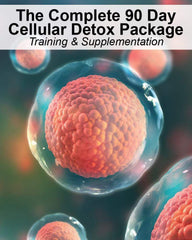
This is exactly why we created the Complete 90 Day Cellular Detox Program.
The goal isn't to do a three-day cleanse and go back to the same habits that created the problem.
It's to create a structured, 90-day approach to supporting detoxification and healthier habits.
The program includes different phases designed to support the body's detoxification process while also educating you about nutrition, lifestyle, and ways to reduce your ongoing exposure burden.
Helps establish the nutritional foundation before moving into the deeper phases of the program.
Focuses on supporting the body's detoxification pathways and elimination processes.
Addresses nutritional support for the brain and the unique considerations involved in supporting neurological health.
An additional component incorporated into the overall protocol.
Provides testing within the program to help personalize the approach.
And perhaps most importantly, the 90-Day Detox Program education helps you understand how to reduce exposure, improve your nutrition, and make healthier choices beyond the supplement itself.
That last part is critical.
A detox protocol shouldn't just change what you're taking. It should change how you're living. It should restore your cell function, transform your lifestyle, and give your body what it needs so you can thrive.
You don't need a complicated diet to support your body's natural detoxification systems.
Start with the basics.
Eat plenty of:
🥦 Cruciferous vegetables
🥬 Leafy greens
🫐 Colorful fruits and vegetables
🥑 Healthy fats
🐟 Quality protein
💧 Plenty of water
And minimize your reliance on highly processed foods, excessive added sugars, and alcohol.
The goal isn't perfection.
It's to consistently give your body the nutrients it needs while reducing unnecessary metabolic and environmental burdens.
Your detoxification strategy shouldn't stop at supplements.
Move your body.
Resistance training helps maintain muscle.
Walking supports circulation and metabolic health.
Cardiovascular exercise improves fitness.
Sweating is one way the body regulates temperature and can eliminate small amounts of certain substances, although it should not be thought of as a primary detoxification pathway.
The bigger benefit of exercise is its effect on your overall metabolic and cardiovascular health, and physical activity is independently associated with lower risk of several cancers.
Your body performs important maintenance while you sleep.
Poor sleep isn't simply about feeling tired the next day.
Sleep affects metabolism, hormones, immune function, appetite regulation, and overall health.
If you're building a longevity-focused lifestyle, sleep belongs right alongside nutrition and exercise.
A detox protocol cannot compensate for chronically poor lifestyle habits.
The foundation always comes first.
This may be the most important principle of all.
If you're continually exposed to something, constantly trying to remove it doesn't solve the underlying problem.
Think about your daily environment.
Could you:
Follow appropriate sun-protection practices? You don't have to eliminate every chemical from your life.
That's impossible.
Instead, focus on meaningful exposure reduction where you have control. And that’s what we will train you to do as part of the Complete 90 Day Cellular Detox Program.
Cancer is not simply a genetic lottery.
Genetics matter—but so do environment, lifestyle, metabolism, and exposures.
And epigenetics gives us another reason to think about health from a whole-body perspective: environmental and lifestyle factors can influence how genes are expressed without changing the DNA sequence itself.
That's why I believe the goal shouldn't be to wait until a health problem appears before taking action.
Build the healthiest internal environment you can today.
Eat real food.
Move your body.
Maintain a healthy weight.
Prioritize sleep.
Reduce avoidable exposures.
Support your body's natural detoxification and elimination systems.
The Complete 90 Day Cellular Detox Program will guide you through each one of these important pillars, from what to eat, how to minimize toxin exposures, and how to detox your body at a cellular level.
It won't guarantee cancer prevention—and no supplement can.
But taking control of the factors you can influence may be one of the most important investments you make in your long-term health.
Don't wait until you're sick to start thinking about prevention.
Your genetics may be part of your story.
They don't have to be the entire story.
1. National Cancer Institute — Cancer Prevention Overview
NCI: Cancer Prevention Overview
2. National Cancer Institute — Risk Factors for Cancer
3. National Cancer Institute — Epigenetics
NCI: Definition of Epigenetics
4. National Cancer Institute — The Genetics of Cancer
5. National Cancer Institute — Cancer-Causing Substances in the Environment
NCI: Cancer-Causing Substances in the Environment
6. National Cancer Institute — Environmental Carcinogens and Cancer Risk
NCI: Environmental Carcinogens and Cancer Risk
7. National Cancer Institute — Cancer Prevention Overview, Health Professional Version
NCI: Cancer Prevention Overview — Health Professional Version
8. National Cancer Institute — Diet and Cancer Risk
9. National Cancer Institute — Diets, Supplements, and Cancer
NCI: Diets, Supplements, and Cancer
10. National Cancer Institute — Antioxidants and Cancer Prevention